

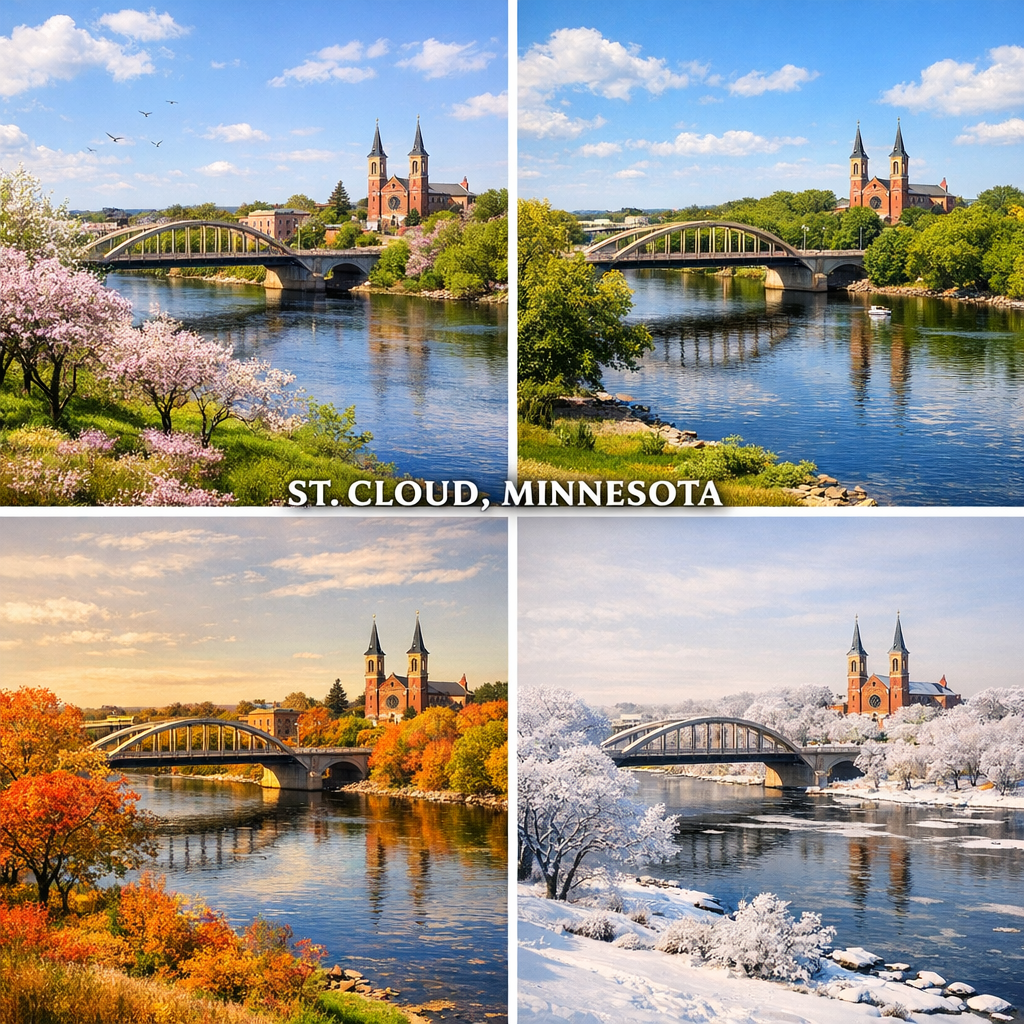
St. Cloud, Minnesota, experiences a humid continental climate characterized by significant seasonal variations. Residents and visitors alike can expect warm, wet summers and cold, snowy winters, with transitional periods in spring and fall.
Seasonal Breakdown
Summer
From late May to mid-September, St. Cloud enjoys warm temperatures, with average daily highs above 70°F. July stands out as the warmest month, boasting average highs around 81°F and lows near 60°F. This period also sees increased rainfall, often accompanied by thunderstorms, contributing to the lush greenery of the region.
Winter
Winter spans from late November to early March, bringing average daily highs below 33°F. January is typically the coldest month, with average highs around 20°F and lows near 2°F. Snowfall is common, transforming the city into a winter wonderland and offering opportunities for activities like ice fishing and snowmobiling.
Spring and Fall
Spring and fall serve as transitional seasons, marked by moderate temperatures and varying precipitation. These periods are ideal for outdoor activities, as the weather is generally pleasant and the natural scenery is particularly vibrant.
Environmental Considerations
St. Cloud’s climate influences various environmental factors, including water quality and local ecosystems. The city has undertaken initiatives to address environmental concerns, such as reducing pollution in Lake George and managing stormwater runoff to protect the Mississippi River. These efforts aim to preserve the natural beauty and health of the region for future generations.
Understanding St. Cloud’s climate is essential for residents and visitors to make the most of what each season has to offer, from summer festivals to winter sports, while also being mindful of the environmental impact of seasonal changes.